

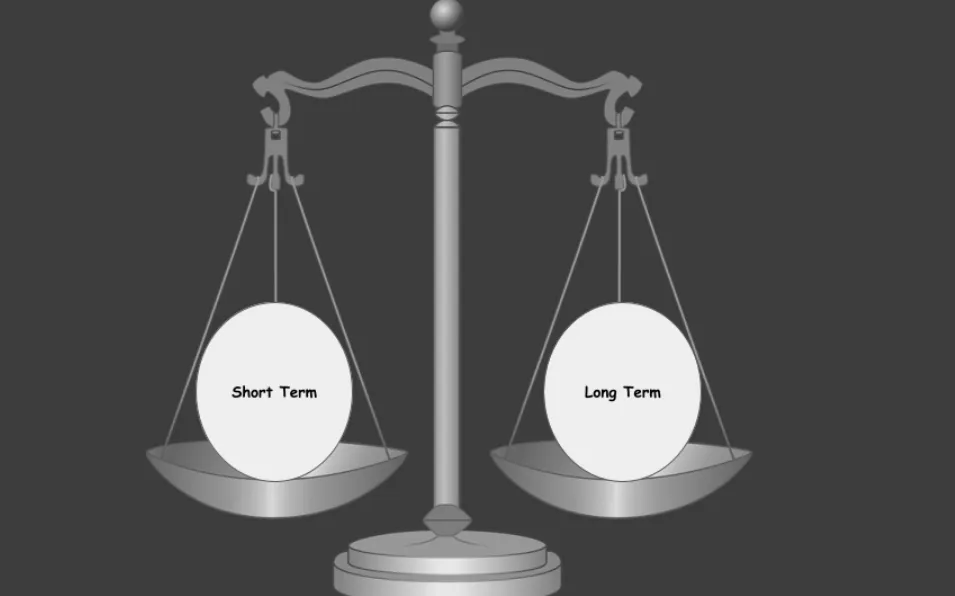
Most goal setting advice pushes you to choose a side. Either focus on the big picture and dream boldly or stay grounded in daily tasks and quick wins. In real life, that split rarely works. What actually sustains progress is treating short term and long-term goals as partners in an ongoing exchange, not competitors for your attention.
A useful way to approach this balance is to think of short-term goals as your fuel and long-term goals as your compass. Fuel without direction leads to motion without meaning. Direction without fuel leads to frustration and burnout. When both are working together, progress feels steady and purposeful instead of rushed or overwhelming.
This balance becomes especially clear during periods of pressure. Financial stress, career uncertainty, or major life changes can force people to focus only on immediate survival. That focus is understandable, but it can crowd out long range thinking. For example, someone managing serious debt may need short term actions like budgeting or negotiating payments while also keeping a long-term recovery vision in mind. Exploring structured options such as bankruptcy debt relief can be part of that balance when short term relief supports long term stability.
Why Short-Term Wins Matter More Than We Admit
Short term goals often get dismissed as shallow or reactive. In reality, they do important psychological work. They provide feedback, momentum, and reassurance that effort is paying off.
Each completed task reinforces a sense of agency. That feeling matters because long term goals often take years to realize. Without smaller milestones along the way, motivation fades. Short term wins keep you emotionally invested in the process.
These goals also help you test strategies. If a daily habit is not producing useful results, it is better to discover that early. Short term goals act like experiments that inform your larger plan.
How Long-Term Vision Shapes Daily Choices
Long term goals serve as filters. They help you decide which short term efforts are worth your energy and which ones are distractions.
Without a guiding vision, it is easy to stay busy without moving forward. You respond to whatever feels urgent rather than what is important. A clear long-term goal does not eliminate daily demands, but it helps you prioritize them.
For example, if your long-term goal involves career growth, short term goals might include skill building or networking rather than only chasing immediate comfort. The vision gives context to effort.
Research on motivation supports this idea. According to the American Psychological Association, people are more likely to persist when they can connect immediate actions to meaningful future outcomes. Their resources on goal setting and motivation explain how aligning daily behavior with long term values improves follow through.
The Hidden Cost of Overcorrecting Toward One Side
Focusing too heavily on short term goals can trap you in maintenance mode. You stay busy fixing problems but never build toward something better. Over time, this leads to stagnation.
On the other hand, focusing only on long term goals can feel inspiring at first but quickly becomes exhausting. When results are far away, every setback feels bigger. Daily life starts to feel like an obstacle rather than part of the journey.
Balance prevents these extremes. It allows you to care about today without losing sight of tomorrow.
Designing Goals That Feed Each Other
One practical strategy is to intentionally design short term goals that directly support long term ones. Instead of creating two separate lists, look for overlap.
If your long-term goal is financial stability, a short-term goal might be tracking spending weekly. If your long-term goal is better health, a short-term goal could be consistent sleep routines. Each small action becomes a building block rather than a detour.
This approach reduces internal conflict. You stop feeling guilty about focusing on immediate needs because they clearly serve a bigger purpose.
Health and wellness experts often emphasize this layered approach. The Mayo Clinic discusses how sustainable behavior change relies on manageable steps aligned with broader health goals. Their guidance on goal setting and lifestyle change highlights the importance of realistic pacing.
Adjusting Goals Without Losing Momentum
Life rarely cooperates with perfect planning. Circumstances change. Energy fluctuates. What mattered last year may not matter now.
Balancing goals means allowing adjustment without abandoning direction. Short term goals are especially flexible. They can change weekly or monthly as needed. Long term goals tend to be more stable, but even they benefit from periodic review.
This adaptability prevents discouragement. When a short-term goal becomes unrealistic, you revise it instead of interpreting the struggle as failure. When a long-term goal no longer fits your values, you update it rather than dragging it forward out of habit.
Using Time Horizons Instead of Deadlines
Another helpful shift is to think in time horizons rather than rigid deadlines. Deadlines can motivate, but they can also create unnecessary pressure when circumstances are unpredictable.
Time horizons offer structure with flexibility. You might think in terms of what you want to improve this month, this year, or over the next five years. This framing allows you to move forward even when progress is uneven.
It also encourages patience. You recognize that not every week needs to show dramatic improvement for the overall trajectory to remain positive.
Satisfaction Comes from Alignment, Not Speed
People often assume that success comes from moving faster. In practice, satisfaction comes from alignment. When your daily actions make sense within your broader vision, effort feels worthwhile even when progress is slow.
Balancing long term and short-term goals helps you experience that alignment. You see how today contributes to tomorrow. You stop feeling pulled in opposite directions.
Over time, this balance builds trust in your own process. You learn that it is possible to care about immediate needs without sacrificing long range aspirations. Instead of choosing between now and later, you allow them to support each other. That is where sustainable progress and real satisfaction tend to grow.

