

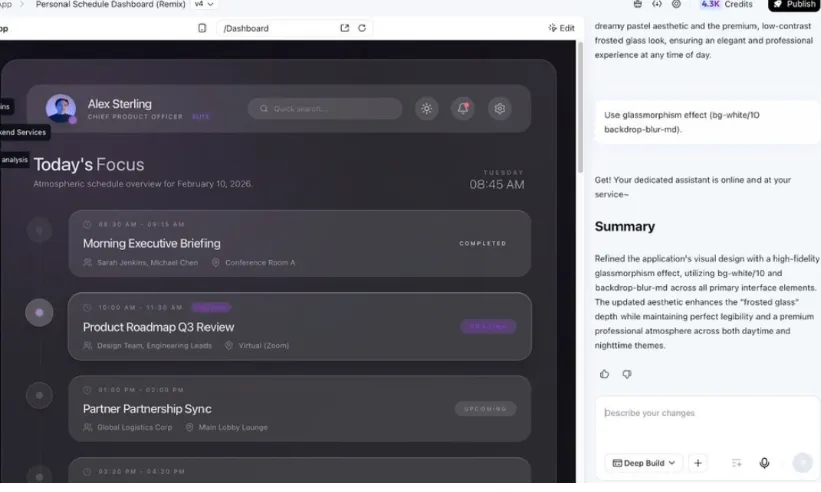
If you have paid attention to software tools recently, you may have noticed how much things have changed. Not long ago, building an app meant hiring engineers and managing complex systems. Today, many of those same tasks can be done with AI tools.
One of the biggest changes is the rise of no-code platforms. These tools are no longer small niche products. They are becoming part of the normal way companies build digital products.
A big reason for this shift is accessibility. Modern platforms simplify development through visual workflows and AI assistance. Because of this, people without technical backgrounds can now build real products.
This includes business owners, teachers, creators, and independent builders. Many of them have never written code, but they can now create applications that real users depend on.
The progress has been fast. Earlier no-code tools mostly supported basic websites or test projects. Today’s platforms can support user accounts, payments, automation, and scalable systems. They are no longer just experiments. They are practical development tools.
Why mobile apps still matter for businesses
Some companies still ask whether they need an app if their website already works well on phones. In most situations, the answer is still yes.
User habits have changed. Many people now prefer apps because they open faster and feel easier to use. Instead of searching through browser tabs, users simply tap an icon.
Apps also help businesses stay visible. When a product sits on a user’s home screen, it becomes part of daily life. Websites rarely create that same level of connection.
Usage patterns also show clear differences. Apps often have higher engagement and better conversion rates than mobile websites. People usually spend more time inside apps and are more likely to complete purchases.
By 2026, having a website is normal. Having a strong app is often what separates growing businesses from the rest.
Why no-code builders are becoming more important
After deciding to build an app, the next decision is how to build it. Hiring developers is still possible, but it usually involves higher costs and longer timelines.
No-code platforms offer a simpler path. They allow teams to build faster while spending less.
The main advantage is efficiency. AI builders can now produce software with many of the same capabilities as traditional development, but in much less time.
Because development always involves time and cost, tools that reduce both quickly become valuable. This is why no-code platforms are becoming essential rather than optional.
Why MeDo is gaining attention among no-code tools
Among many available platforms, MeDo stands out because it focuses on building complete applications instead of partial solutions. After using the platform in real projects, several strengths become clear.
1. It creates full applications, not just pieces
Many no-code tools only solve part of the process. Some help design screens but leave backend setup to users. That is often where projects slow down.
MeDo takes a different approach. Its AI builds the interface, data structure, and integrations together. When the process finishes, the product already works.
There is no need to connect outside hosting. No need to configure databases manually. Everything happens inside one environment.
For founders and creators, this can remove weeks of setup work.
2. Built for people without technical backgrounds
Some platforms still assume users understand technical terms. Words like API or database logic can quickly make tools feel complicated.
MeDo focuses on keeping things simple. It assumes users have ideas, not engineering training.
If issues appear, the system often fixes them automatically. Users do not need to debug problems themselves or search technical forums.
Another useful feature is layout recreation. Users can upload screenshots of existing products and turn them into editable projects. This removes the need for design skills.
3. Integrations that support real products
An application only becomes useful when it supports real users. MeDo includes plugins that allow projects to move beyond simple demos.
For example, payment tools like Stripe can be added easily. Media tools such as Nano Banana Pro can extend functionality. Custom plugins can also be included when needed.
This flexibility means projects are not limited by basic platform features.
4. Designed for real usage, not just demos
Some no-code platforms work well for presentations but struggle with real users. Performance or payment reliability can become issues.
MeDo is designed for production from the start. It can support SaaS products, internal tools, games, and mobile utilities.
More than one million applications have already been built using the platform. These range from simple tools to complex business software.
This shows the platform is meant for real deployment.
5. A pricing model that fits real builders
Many platforms use subscription pricing. Users pay monthly even when they are not actively building.
MeDo uses a credit system instead. Users receive 100 free credits each day, allowing them to experiment without pressure.
Paid plans start at $20 for 2000 credits. Compared with tools like Replit or Lovable, this can be more cost-effective.
Users only pay when they actually build. This avoids wasted subscription costs.
6. What people are building with MeDo
Projects built with MeDo include:
- SaaS platforms with dashboards
- Interactive games
- Mobile business apps
- Internal company tools
- E-commerce platforms
- Educational software
Each includes backend systems and real user support. These are complete applications, not just visual mockups.
Final thoughts
After building several projects with MeDo, one thing becomes clear. The platform delivers what many no-code tools promise but do not always achieve — the ability to build real software without technical barriers.
Accessibility is one of its strongest advantages. Anyone can start using the platform with daily free credits, and no payment details are required.
For people who want to avoid the cost and complexity of traditional development, MeDo offers a practical option. It is simple enough for beginners and capable enough for serious projects.
For builders who want to turn ideas into working products quickly, it is worth considering.

